
Period Calculator – Predict Your Next Period & Ovulation Date
A Period Calculator helps you to track your menstrual cycle in a quick and simple way. Just enter the first day of your last period and your cycle length to see when your next period may start. It also shows your possible ovulation days so you can understand your body better and stay prepared each month.
This tool provides estimates only and is not medical advice.
Many women feel confused about their menstrual cycle because the dates do not always stay the same every month. Sometimes the period arrives earlier, sometimes it is late, and this can make it hard to plan daily activities, travel, school, or work. That is where a Pregnancy Calculator can also be helpful, as it uses your cycle information to give better insights and helps you stay more prepared and organized.
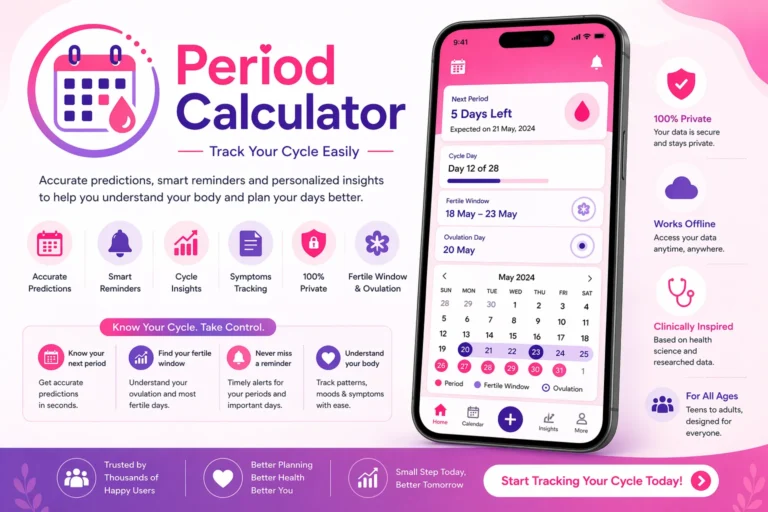
Not knowing the expected date can also cause unnecessary stress. Keeping track of these changes manually can be difficult, especially if someone forgets to write the dates down or loses track after a few months.
A period calculator app makes this process simple and clear. By entering the first day of your last period and your usual cycle length, you can quickly check the estimated date of your next period and understand your cycle better.
It also shows important days like ovulation and fertile days, which gives a better view of how the menstrual cycle works. With regular tracking, it becomes easier to notice patterns, stay prepared each month, and manage personal health with more confidence.
What is a Period Calculator?
A Period Calculator is a simple online tool that helps you to track your menstrual cycle easily. By entering the first day of your last period and your usual cycle length, it can predict when your next period is likely to start.
It also shows important days like ovulation and fertile days, which gives you a clear view of your cycle. This tool makes it easier to plan your schedule, stay prepared, and understand your body’s patterns without the guesswork.
How to Use Our Period Calculator?
Tracking your menstrual cycle does not have to be tough. Using our accurate Period Calculator is quick and simple, and it gives you a clear idea of your next period, ovulation, and fertile days. Just follow these easy steps in order, and you will have all the information you need in minutes.
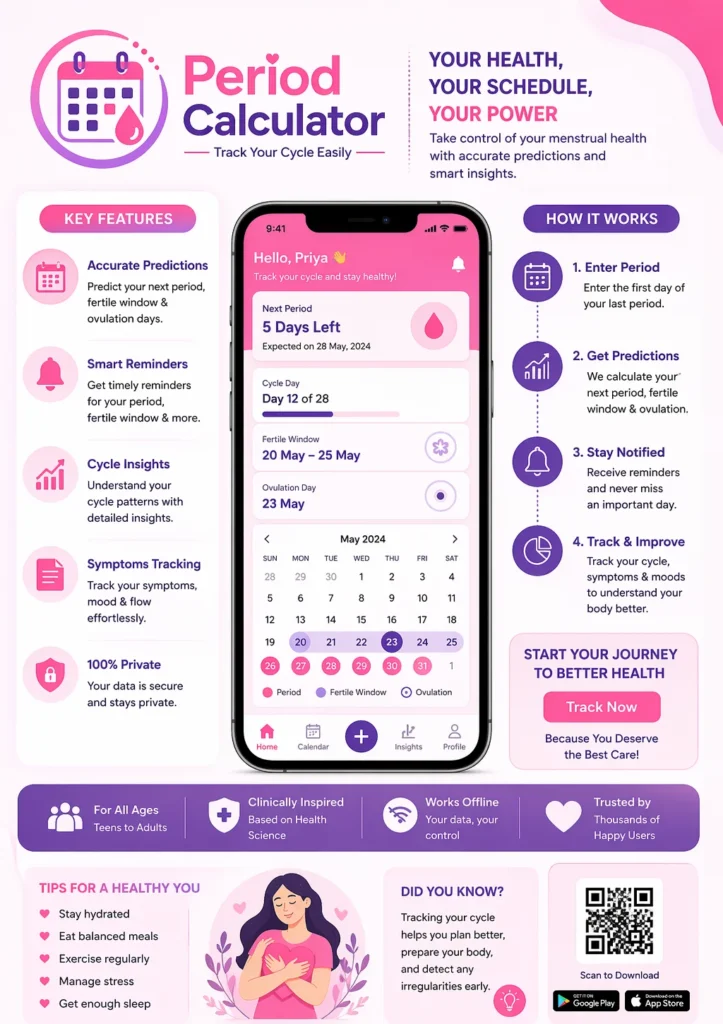
Step 1: Enter the First Day of Your Last Period
You can start by putting in the date when your last period began. This is important because the calculator uses this day as the starting point to predict your next cycle. You should make sure to check your calendar carefully so the date is accurate.
Step 2: Enter Your Cycle Length
Next, enter the usual length of your menstrual cycle. Most cycles are between 28 – 32 days, but everyone’s is different. By entering this number, the calculator can figure out how long it takes from one period to the next.
Step 3: Click “Calculate”
After entering the dates, simply click the “Calculate” button. The tool will process your information and show the expected start date of your next period, along with your ovulation and fertile days.
Step 4: Review Your Results
Once the results appear, you can see a clear timeline of your cycle. Use this information to plan your month, manage health reminders, or track any changes in your cycle over time.
Step 5: Track Regularly for Accuracy
For the best results, use the calculator every month. Updating it with your latest period helps you to notice patterns and makes predictions more accurate. Over time, it becomes a useful guide to understand your body better.
How Does a Period Calculator Work?
A Period tracker works by using simple information about your menstrual cycle to predict important dates.
First, it needs the first day of your last period and your usual cycle length. Then, it calculates the likely start date of your next period based on how long your cycle usually lasts.
The calculator also estimates ovulation and fertile days by identifying the middle part of your cycle, which is when the body is most likely to release an egg.
By tracking this information every month, the tool can give you a clearer picture of your cycle, which helps you to stay prepared and understand your body’s patterns better.
Period Cycle Phases
Understanding your menstrual cycle becomes much easier when you know that it has different phases. Each phase affects your body in unique ways, and knowing them can help you to track your cycle and plan better. These are the four main phases:
1. Menstrual Phase
This is the phase when bleeding happens. It mostly lasts 3 – 7 days, depending on each person. During this time, the body sheds the lining of the uterus from the previous cycle. You may feel tired, have cramps, or experience mood changes, which is completely normal.
2. Follicular Phase
After your period ends, the follicular phase begins. Your body starts preparing an egg for the next cycle. Hormones rise to help the egg mature, and the uterus lining starts building up again. This phase usually lasts about 10 – 14 days, and energy levels often start to improve as the period ends.
3. Ovulation Phase
Ovulation is when a mature egg is released from the ovary, mostly around the middle of the cycle. This is the most fertile time, which means it is when pregnancy is most likely if you are trying. Some people may notice slight changes in body temperature or cervical mucus during this phase.
4. Luteal Phase
After ovulation, the luteal phase begins. The body prepares the uterus for a possible pregnancy. If the egg is not fertilized, then hormone levels drop, which leads to the next period. This phase mostly lasts about 14 days and may bring symptoms like bloating, mood swings, or breast tenderness.
Factors That Can Affect Your Period Cycle
Many things can change your menstrual cycle from month to month. Stress and emotional changes can make your period early or late. Diet and exercise also play a role, as too much or too little can affect hormones. Illness, medications, or health conditions like thyroid problems or PCOS can change the cycle as well. Even travel or changes in sleep can make your period irregular. The knowledge of these factors helps you to track your cycle more accurately using a due date calculator.
FAQs
Final Words
Our Period Calculator updated version is a simple and useful tool to understand your menstrual cycle better. It helps you to predict your next period, ovulation, and fertile days, which makes it easier to plan your month and stay prepared. While factors like stress or irregular cycles can affect accuracy, regular tracking improves predictions and helps you to take control of your health in a clear way.